Description
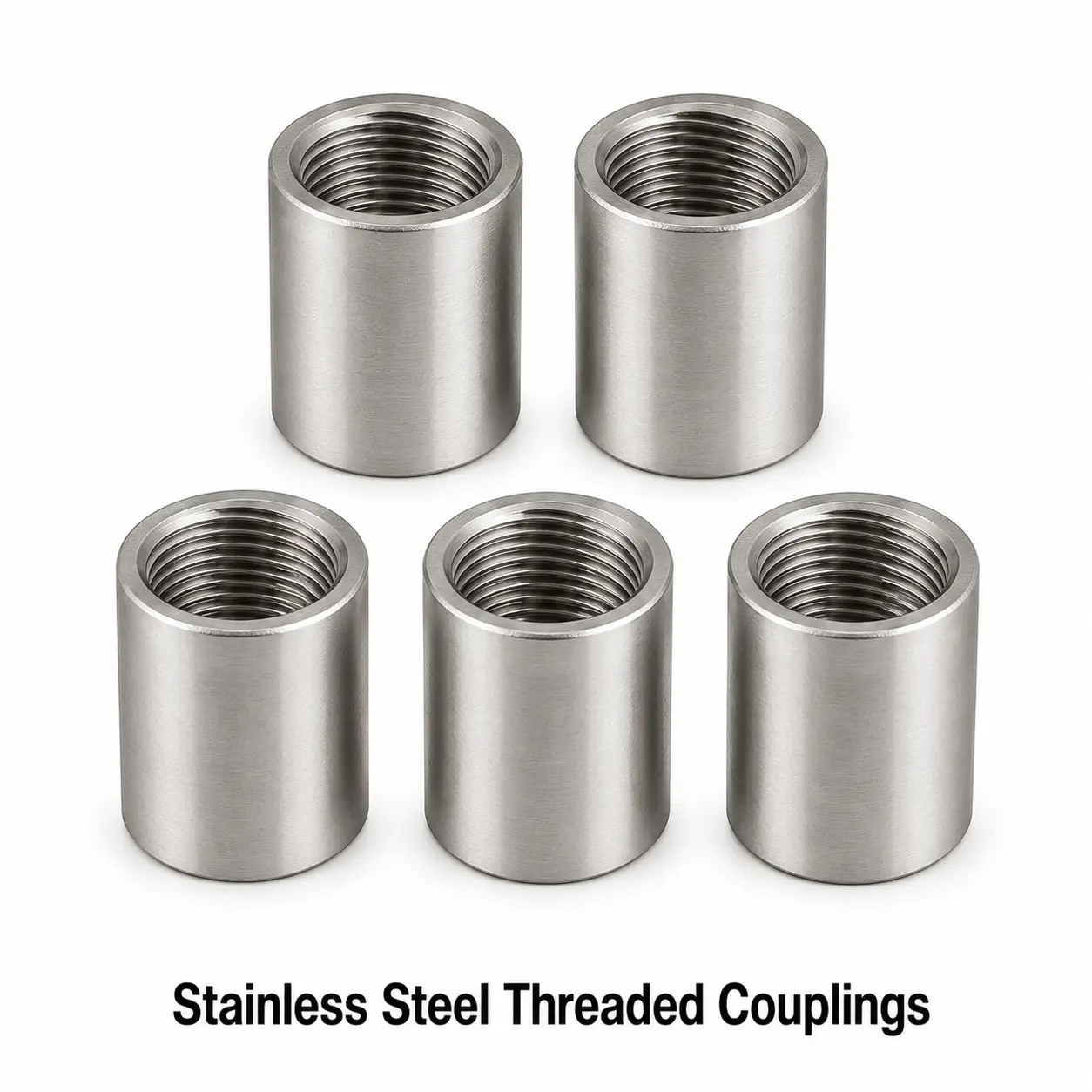
Stainless Steel Threaded Couplings
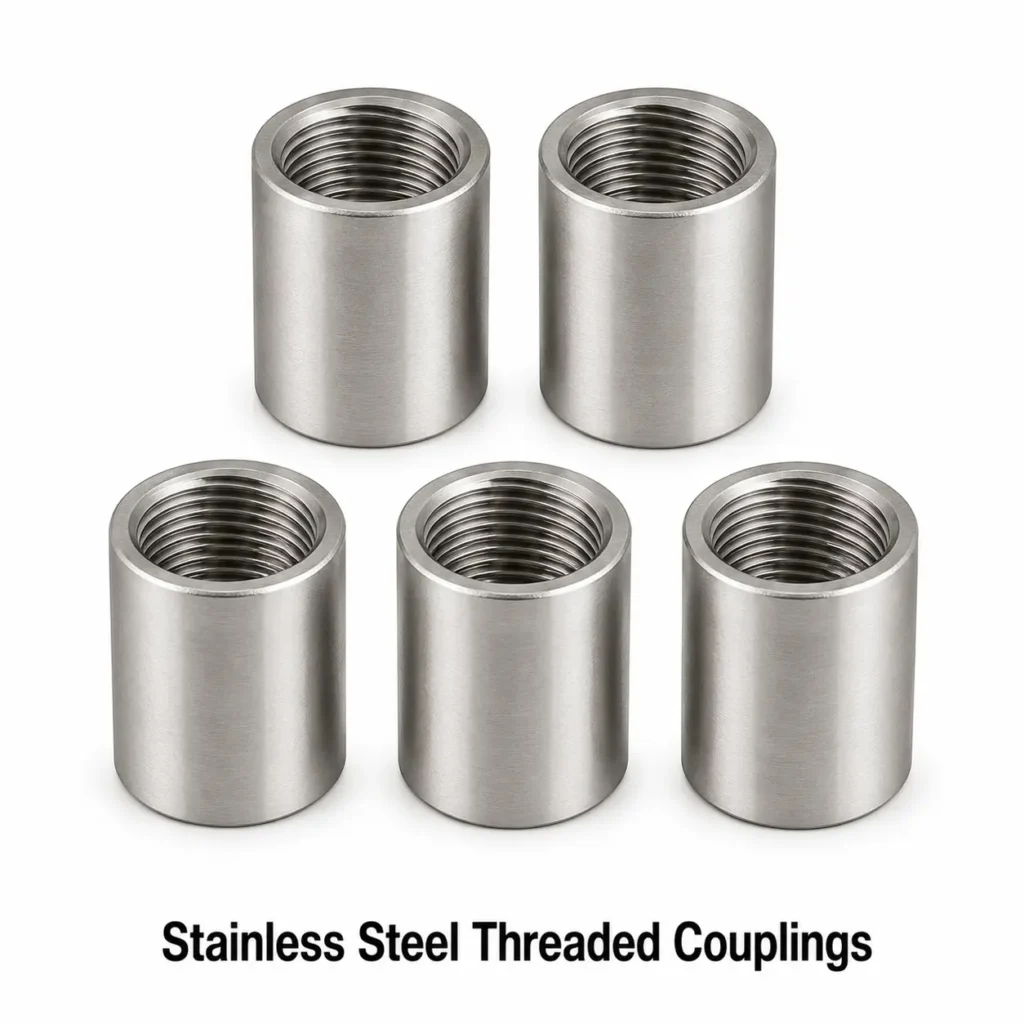
A stainless steel threaded coupling, or full coupling, joins two lengths of threaded pipe of the same nominal size in a straight run. It is the standard fitting for extending pipe runs and making inline connections without welding.
Forged to ASME B16.11 in 304/316 stainless, our couplings are available in straight (equal) and reducing patterns and in NPT, BSPT and BSPP threads. A full coupling is threaded through both ends, distinguishing it from a half coupling.
Manufacturing & Construction
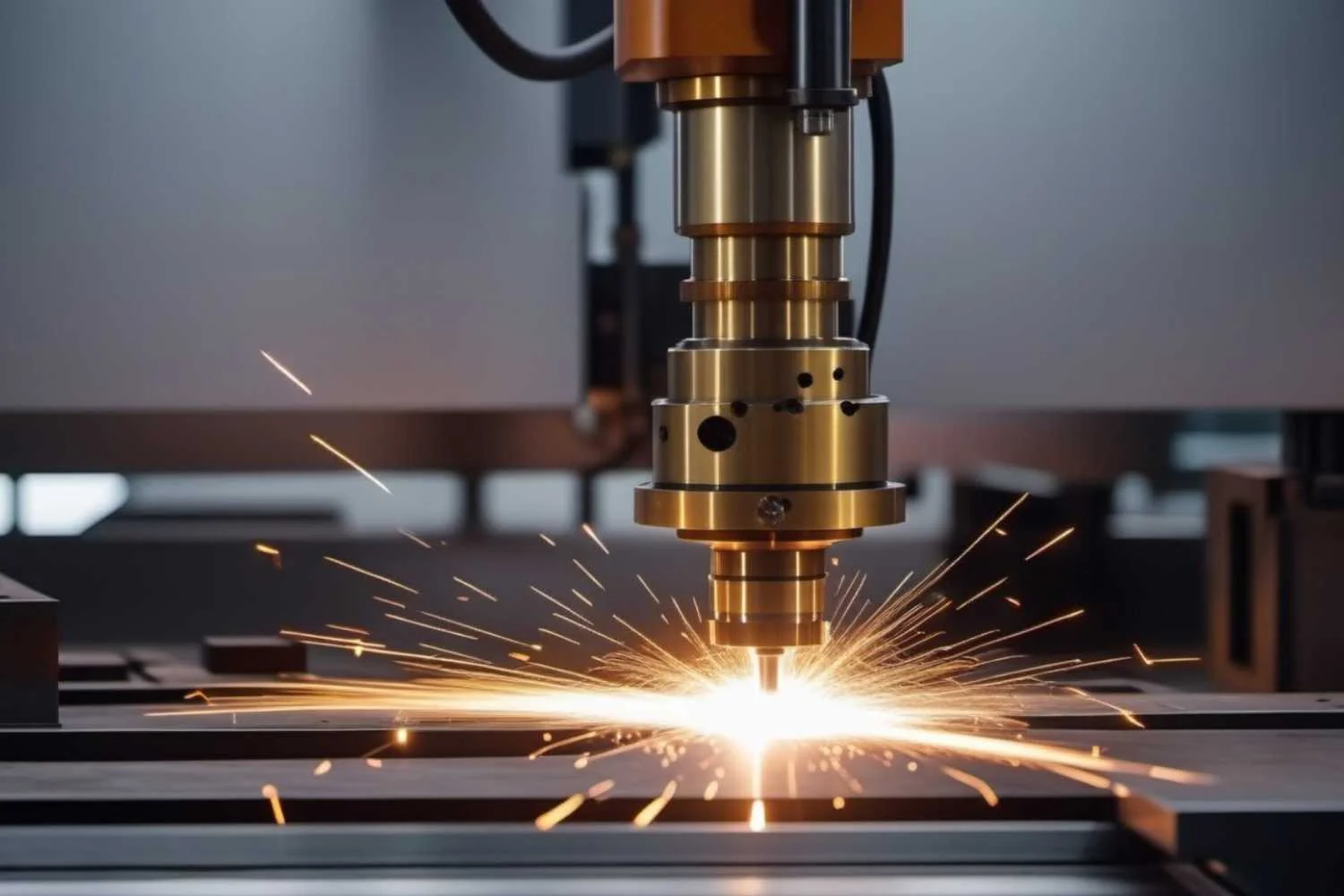
Our threaded couplings are produced by hot forging bar or billet, which aligns the grain flow with the shape of the fitting and eliminates the porosity associated with castings. The forgings are then solution-annealed, machined to the ASME B16.11 body dimensions and thread-cut to the required NPT, BSPT or BSPP form. Every piece is finally pickled and passivated to restore the passive chromium-oxide layer that gives stainless steel its corrosion resistance.
Material Grades & Chemical Composition
The fittings are supplied as standard in austenitic grades 304, 304L, 316 and 316L, with higher alloys available on request. The low-carbon (L) grades are preferred where the fitting will be welded, as they resist sensitisation and intergranular corrosion in the heat-affected zone. Typical chemical composition (per ASTM A182) is shown below.
| Grade (ASTM A182) | C max | Cr | Ni | Mo | Mn max |
|---|---|---|---|---|---|
| F304 | 0.08 | 18.0–20.0 | 8.0–11.0 | — | 2.0 |
| F304L | 0.030 | 18.0–20.0 | 8.0–13.0 | — | 2.0 |
| F316 | 0.08 | 16.0–18.0 | 10.0–14.0 | 2.0–3.0 | 2.0 |
| F316L | 0.030 | 16.0–18.0 | 10.0–14.0 | 2.0–3.0 | 2.0 |
Dimensions & Standards
Dimensions, wall thickness and thread lengths conform to ASME B16.11 (forged fittings), with BS 3799 and MSS SP-83 also referenced. The standard size range is 1/8″ to 4″ nominal bore. Body dimensions increase with pressure class, so a Class 6000 fitting has a heavier wall than a Class 3000 fitting of the same size. Full centre-to-end and thread-engagement figures are available on our dimensional datasheet.
Pressure Class & Temperature Ratings
Threaded fittings to ASME B16.11 are rated by pressure class. Each class is derived from the strength of a matching schedule of pipe, and the allowable working pressure reduces as temperature rises. This product is available in Class 2000, 3000 and 6000.
| Pressure Class | Equivalent Pipe Wall (basis of rating) |
|---|---|
| Class 2000 | Schedule 80 / XS |
| Class 3000 | Schedule 160 |
| Class 6000 | Schedule XXS |
Because austenitic stainless retains useful strength at elevated temperature and remains tough at cryogenic temperature, these fittings serve across a very wide temperature band; the exact allowable pressure at your design temperature should be taken from the ASME B16.11 rating tables for the selected class and grade.
Threading & Sealing
We supply three thread forms so the fitting can be matched to any piping standard. Tapered threads (NPT, BSPT) seal on the thread flanks with PTFE tape or sealant; parallel threads (BSPP) require a bonded washer, O-ring or gasket to seal.
| Thread | Standard | Type |
|---|---|---|
| NPT | ANSI/ASME B1.20.1 | Tapered |
| BSPT (R) | BS 21 / ISO 7-1 | Tapered |
| BSPP (G) | BS 2779 / ISO 228 | Parallel |
Testing, Inspection & Certification
Each heat is verified for chemical composition and mechanical properties (tensile, yield, elongation and hardness). Positive material identification (PMI) confirms the grade, and hydrostatic or pneumatic testing, dye-penetrant examination and intergranular corrosion (IGC) testing to ASTM A262 are carried out where the order requires. Fittings are marked with the heat number, size, grade, class and brand, and are supplied with an EN 10204 3.1 mill test certificate with full traceability.
Installation Guidelines
To make a reliable, leak-free joint and to join two same-size pipes in a straight run correctly:
- Check that both pipe ends are cut square, deburred and correctly threaded.
- Apply PTFE tape or sealant to each male pipe thread and make up hand-tight plus 2–3 wrench turns.
- For a reducing coupling, confirm the two port sizes match the drawing.
- Do not use a full coupling as a union — it cannot be broken without unscrewing one of the pipes.
Applications & Industries
Stainless steel threaded couplings are used across oil & gas, petrochemical and refining, chemical and fertiliser plants, power generation, pharmaceuticals, food and dairy, water treatment, shipbuilding and general engineering — anywhere a compact, corrosion-resistant, high-pressure screwed connection is needed.
Specifications at a Glance
| Product | Stainless Steel Threaded Couplings |
| Standard | ASME B16.11, BS 3799, MSS SP-83 |
| Material Grades | ASTM A182 – F304, F304L, F316, F316L, F321, F310, duplex F51/F53 (on request) |
| Size Range | 1/8″ to 4″ (NB) |
| Pressure Class | Class 2000, 3000 and 6000 |
| Thread Type | NPT, BSPT (R) and BSPP (G) |
| End Connection | Female threaded both ends; straight and reducing |
| Manufacturing | Hot forged, then machined and threaded |
| Surface Finish | Pickled and passivated; polished on request |
| Tolerances | Per ASME B16.11 / manufacturer standard |
| Marking | Heat number, size, grade, class and brand |
| Testing | Chemical, mechanical (tensile/hardness), PMI, hydrostatic/air, dye-penetrant, IGC (as required) |
| Certification | EN 10204 3.1 / 3.2 mill test certificate |
Frequently Asked Questions
Q1. What is the difference between a full coupling and a half coupling?
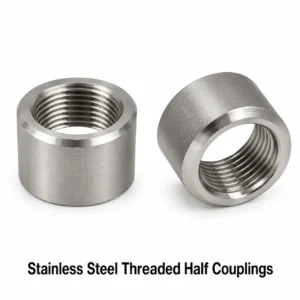
A full coupling is threaded (or socketed) at both ends to join two pipes, whereas a half coupling is threaded at one end only and is welded or fixed to a pipe, vessel or header to provide a single branch/outlet.
Q2. What is the difference between a coupling and a union?
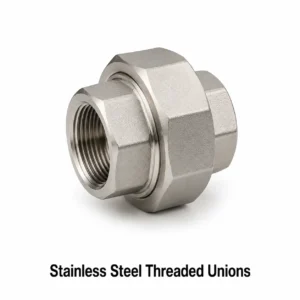
A coupling permanently joins two pipes and can only be removed by unscrewing a pipe, while a union is a three-piece fitting whose central nut lets the joint be broken for maintenance without disturbing the pipe.
Q3. Do you offer reducing couplings?
Yes, reducing couplings with two different port sizes are available to connect pipes of different diameters in a straight run.
Q4. Can a full coupling be used to repair a pipe?
Yes, full couplings are commonly used for inline extensions and repairs; for joints that must be dismantled later, use a union instead.
Q5. What class of coupling do I need for high-pressure hydraulics?
High-pressure hydraulic and instrument lines typically use Class 6000 couplings in 316; select the class to match or exceed the system design pressure at temperature.
Q6. Is a coupling full-bore?
A straight coupling maintains the nominal bore of the connected pipe so flow is essentially unrestricted; a reducing coupling steps the bore down at the smaller end.
Q7. What material grades are your threaded couplings available in?
They are manufactured in austenitic stainless steel grades ASTM A182 F304, F304L, F316 and F316L as standard, with F321, F310, 904L and duplex/super-duplex (F51, F53, F55) available on request. Grade selection depends on the operating temperature, media and corrosion environment.
Q8. What is the difference between 304 and 316 for threaded fittings?
Grade 316 contains 2–3% molybdenum, which gives significantly better resistance to chlorides, pitting and crevice corrosion, making it the preferred choice for marine, coastal and aggressive chemical service. Grade 304 is more economical and well suited to fresh water, steam, food and general industrial use.
Q9. What does the pressure Class (2000/3000/6000) mean?
The class is a pressure–strength rating defined by ASME B16.11. Class 2000 threaded fittings are rated on the basis of Schedule 80/XS pipe, Class 3000 on Schedule 160 and Class 6000 on Schedule XXS. A higher class means a heavier body and a higher allowable working pressure at a given temperature.
Q10. Which thread standards do you supply — NPT, BSPT or BSPP?
We supply NPT (ANSI/ASME B1.20.1, tapered), BSPT / R (BS 21 / ISO 7-1, tapered) and BSPP / G (BS 2779 / ISO 228, parallel). Tapered threads seal on the thread flanks; parallel threads require a bonded seal, washer or O-ring. Always match the fitting thread to the mating component.
Q11. What size range is available?
Standard sizes run from 1/8″ up to 4″ nominal bore. Intermediate and reducing combinations are available, and larger or special sizes can be produced to order.
Q12. Are the fittings forged or cast?
Our threaded fittings are hot forged and then machined and threaded. Forging produces a dense, void-free grain structure with superior mechanical strength and pressure integrity compared with cast fittings.
Q13. What test certificates are provided?
Every consignment is supplied with an EN 10204 3.1 mill test certificate covering chemical composition and mechanical properties, with heat-number traceability. 3.2 certification, PMI (positive material identification), hydrostatic/pneumatic test, dye-penetrant and IGC (intergranular corrosion) reports can be provided on request.
Q14. How should the threaded joints be sealed?
Tapered threads are normally sealed with PTFE tape or a suitable thread sealant applied to the male thread, then made up hand-tight plus the recommended number of turns with a wrench. Do not over-tighten, which can gall the stainless threads or split the fitting.
Q15. Do stainless steel threads gall, and how is it prevented?
Austenitic stainless can gall (cold-weld) if threads are made up dry and fast. Galling is prevented by using PTFE tape or an anti-seize/thread sealant, assembling slowly, and avoiding excessive torque. Using dissimilar grades on the two halves also reduces the tendency.
Q16. Can you supply custom sizes, grades or private marking?
Yes. In addition to the standard range we manufacture to customer drawings and specifications, including special sizes, higher classes, alternative grades and customer-specified heat/marking and packaging.
Request a Quotation
Stainless Steel Fittings India manufactures, stocks and exports the complete range of stainless steel threaded fittings in grades 304, 304L, 316 and 316L, in NPT, BSPT and BSPP threads and Classes 2000, 3000 and 6000. Every order is supplied with EN 10204 3.1 mill test certificates and full traceability, with custom sizes, grades and thread forms available.
Get pricing, stock availability and datasheets for your project: Contact our sales team »
Reviews
There are no reviews yet.