Introduction: The Most Important Material Selection Decision in Industrial Engineering
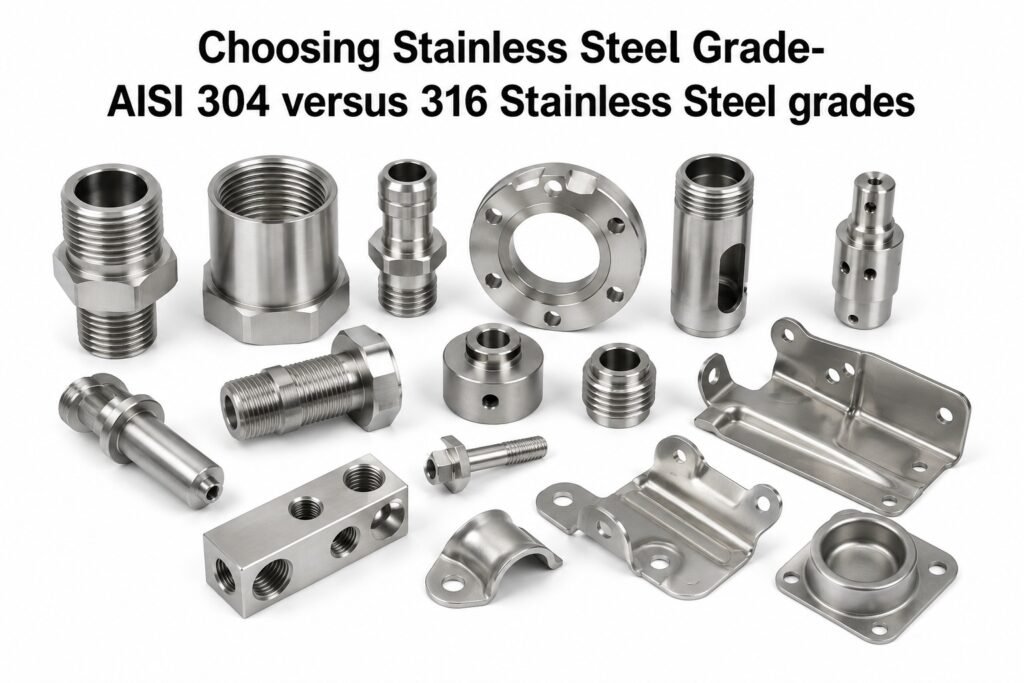
If there is one material selection decision that engineers, procurement specialists, and project managers encounter more than any other in industrial manufacturing, it is the choice between Stainless Steel Grade AISI 304 and Stainless Steel Grade AISI 316. At first glance, the two appear nearly identical — similar appearance, similar strength, similar cost. But the differences between these two grades, when misunderstood or ignored, can lead to catastrophic corrosion failures, product contamination, premature replacement, and significant financial loss.
This definitive technical guide gives you the full engineering framework to make the right choice every time — covering chemical composition, corrosion mechanisms, mechanical properties, weldability, high-temperature performance, industry-specific recommendations, and a practical decision tree for grade selection.
The Fundamental Difference: Molybdenum
The single most important chemical difference between SS 304 and SS 316 is the addition of molybdenum (Mo) at 2.0–3.0% in SS 316. This seemingly small alloying addition has a profound and measurable effect on corrosion resistance, particularly in chloride-containing environments.
Chemical Composition Comparison
| Element | SS 304 (UNS S30400) | SS 316 (UNS S31600) |
|---|---|---|
| Carbon (C) | ≤ 0.08% | ≤ 0.08% |
| Chromium (Cr) | 18.0 – 20.0% | 16.0 – 18.0% |
| Nickel (Ni) | 8.0 – 10.5% | 10.0 – 14.0% |
| Molybdenum (Mo) | Nil | 2.0 – 3.0% |
| Manganese (Mn) | ≤ 2.0% | ≤ 2.0% |
| Silicon (Si) | ≤ 1.0% | ≤ 1.0% |
| Phosphorus (P) | ≤ 0.045% | ≤ 0.045% |
| Sulfur (S) | ≤ 0.030% | ≤ 0.030% |
| Iron (Fe) | Balance | Balance |
International Standard Cross-References:
| Standard | SS 304 | SS 316 |
|---|---|---|
| AISI / UNS | 304 / S30400 | 316 / S31600 |
| EN (European) | 1.4301 | 1.4401 |
| DIN (German) | X5CrNi18-10 | X5CrNiMo17-12-2 |
| BS (British) | 304 S31 | 316 S31 |
| JIS (Japan) | SUS 304 | SUS 316 |
How Molybdenum Improves Corrosion Resistance
Molybdenum stabilizes the passive oxide film on SS 316’s surface, particularly in the presence of chloride ions (Cl⁻). Chlorides are among the most aggressive corrosion promoters because they can penetrate the passive chromium oxide layer, initiating pitting corrosion — localized, deep attacks that can perforate thin-walled components rapidly.
The mechanism of chloride pitting proceeds as follows: chloride ions adsorb onto the passive film surface, then displace oxygen from the oxide lattice at weak points such as grain boundaries and inclusions. A local anodic pit forms beneath the locally disrupted passive film. The pit grows autocatalytically — the anodic dissolution reaction produces H⁺, lowering local pH, which prevents repassivation, and the pit propagates inward.
Molybdenum inhibits this attack by making the passive film more stable and more resistant to chloride adsorption. It also enhances repassivation kinetics, enabling the protective oxide layer to reform more rapidly even after damage.
Pitting Resistance Equivalent Number (PREN)
The PREN is a calculated index that provides a comparative ranking of a grade’s resistance to pitting corrosion:
PREN = %Cr + 3.3(%Mo) + 16(%N)
| Grade | Typical PREN | Interpretation |
|---|---|---|
| SS 304 | ~18–20 | Moderate pitting resistance |
| SS 316 | ~25–27 | Good pitting resistance |
| SS 904L | ~35–40 | Excellent pitting resistance |
| Duplex 2205 | ~35–38 | Excellent pitting resistance |
For chloride-containing environments where pitting is a concern, a PREN > 25 is generally recommended — pointing clearly toward SS 316 over SS 304 for most marine, coastal, and chemical processing applications.
Mechanical Properties Comparison
Both grades are austenitic and share very similar mechanical property ranges. The differences are minor but worth noting for completeness:
| Property | SS 304 | SS 316 |
|---|---|---|
| Tensile Strength (UTS) | 515 MPa min | 515 MPa min |
| Yield Strength (0.2%) | 205 MPa min | 205 MPa min |
| Elongation | ≥ 40% | ≥ 40% |
| Hardness (Brinell) | ≤ 201 HBW | ≤ 217 HBW |
| Elastic Modulus | 193 GPa | 193 GPa |
| Density | 7.93 g/cm³ | 7.98 g/cm³ |
In terms of mechanical performance alone, there is no compelling reason to choose one grade over the other. The decision must be driven primarily by environmental and chemical service conditions.
Critical Pitting Temperature (CPT) and Crevice Corrosion
Two standardized tests directly quantify the difference in corrosion resistance between the two grades.
Critical Pitting Temperature (CPT) — ASTM G48 Method C
| Grade | CPT in 1M FeCl₃ |
|---|---|
| SS 304 | ~15°C |
| SS 316 | ~35°C |
SS 316 can tolerate significantly higher temperatures in aggressive chloride environments before pitting initiates — a critical design parameter for equipment operating in tropical marine environments or hot brine processing.
Critical Crevice Temperature (CCT) — 10% FeCl₃
| Grade | CCT |
|---|---|
| SS 304 | ~0°C |
| SS 316 | ~20°C |
Crevice corrosion initiates in stagnant zones — under gaskets, beneath bolt heads, in overlapping surfaces — where oxygen is depleted and chloride concentration increases locally. Gasket-sealed flanged joints, bolted covers, and tube-to-tubesheet joints in the presence of chlorides should specify SS 316 at minimum.
Stress Corrosion Cracking (SCC)
Both SS 304 and SS 316 are susceptible to chloride stress corrosion cracking (CSCC) — a form of corrosion that requires the simultaneous presence of a susceptible material, tensile stress (residual or applied), and a specific environment (chloride ions, often at elevated temperature). Neither grade is immune, and the resistance of SS 316 over SS 304 to CSCC is less pronounced than for pitting or crevice corrosion.
In highly aggressive CSCC environments — seawater above 60°C, chemical plants with high-concentration chlorides — duplex stainless steels (e.g., 2205) or super-austenitic grades (e.g., 904L, 254 SMO) should be evaluated.
High-Temperature Performance and Sensitization
Both SS 304 and SS 316 are used in elevated temperature applications. Sensitization occurs when stainless steel is exposed to temperatures in the 425–870°C range for extended periods. Carbon migrates to grain boundaries and precipitates as chromium carbide (Cr₂₃C₆), depleting the adjacent metal of chromium and creating a zone susceptible to intergranular corrosion (IGC).
| Property | SS 304 | SS 316 | SS 304L | SS 316L |
|---|---|---|---|---|
| Max. Continuous Service Temp | 870°C | 870°C | 870°C | 870°C |
| Max. Intermittent Service Temp | 925°C | 925°C | 925°C | 925°C |
| Sensitization Range | 425–870°C | 425–870°C | Reduced risk | Reduced risk |
| Weld sensitization risk | Moderate | Moderate | Low | Low |
The L-grade variants (304L and 316L) reduce maximum carbon content to ≤ 0.03%, dramatically reducing the risk of sensitization during welding. For any fabricated assembly involving welding and subsequent exposure to corrosive media, 304L or 316L should always be specified.
Chemical Resistance Comparison: Key Environments
| Environment | SS 304 | SS 316 | Notes |
|---|---|---|---|
| Fresh water | Excellent | Excellent | Both suitable |
| Seawater (ambient) | Poor – Not recommended | Marginal | Neither ideal; use 904L/duplex |
| Coastal/marine atmosphere | Acceptable | Good | 316 preferred |
| Dilute sulfuric acid | Poor above 2% | Moderate | Consult corrosion charts |
| Nitric acid (dilute to moderate) | Excellent | Good | 304 actually performs well |
| Phosphoric acid | Moderate | Good | 316 preferred |
| Acetic acid | Good | Excellent | 316 preferred at concentration |
| Sodium chloride (brine) | Moderate (pits >60°C) | Good | 316 standard choice |
| Hydrochloric acid | Poor | Poor | Neither recommended |
| Sodium hydroxide | Good | Good | Both suitable |
| Bleach / Hypochlorite | Poor (even dilute) | Marginal | Caution required |
| Organic acids (citric, lactic) | Good | Excellent | 316 strongly preferred |
Welding Considerations
Both SS 304 and SS 316 are weldable by all common fusion welding processes — GTAW (TIG), GMAW (MIG), SMAW (Stick), SAW, and PAW. The correct filler metal selection is critical:
| Base Metal | Recommended Filler (AWS) |
|---|---|
| SS 304 | ER308 / ER308L |
| SS 304L | ER308L |
| SS 316 | ER316 / ER316L |
| SS 316L | ER316L |
| 304 to 316 dissimilar weld | ER309 or ER316L |
Post-weld treatment recommendations include: for non-L grades welded at low heat input, post-weld passivation (citric or nitric acid treatment per ASTM A967) is recommended. In aggressive environments, post-weld annealing at 1050–1100°C followed by rapid quench eliminates sensitization. Electropolishing of weld zones in pharmaceutical and food-grade applications removes heat tint and restores corrosion resistance.
Cost Comparison and Economic Considerations
| Factor | SS 304 | SS 316 |
|---|---|---|
| Relative raw material cost | Baseline | ~20–30% premium (varies with Mo market) |
| Availability | Excellent | Very good |
| Machinability | Similar | Slightly harder to machine |
| Life cycle cost (marine) | Higher (more replacements) | Lower (longer service life) |
The upfront premium for SS 316 must always be weighed against the life cycle cost implications of choosing SS 304 in an inappropriate environment. Corrosion failures requiring plant shutdowns, product contamination in food/pharma, warranty claims, replacement labor, and safety incidents from structural failures can far exceed the incremental material cost difference.
Grade Selection Decision Tree
Step 1: Chloride Exposure?
If no chlorides are present, SS 304 is generally acceptable — proceed to Step 3. If chlorides are present, proceed to Step 2.
Step 2: Chloride Concentration and Temperature?
For low chloride (< 200 ppm) at ambient temperature, SS 304 may be acceptable with caution. For moderate chloride at any temperature, SS 316 is required. For high chloride, seawater, or brine, consider duplex 2205 or 904L — SS 316 is the minimum. For chlorides combined with elevated temperature (> 60°C), there is high risk of SCC and duplex grades should be considered.
Step 3: Will the Component Be Welded?
If no welding is involved, either standard grade is acceptable. If welding is required and the component will be in corrosive service, specify the L-grade (304L or 316L).
Step 4: Regulatory Requirements?
For pharmaceutical (USP, cGMP, FDA) applications, both are approved but 316L is preferred for product-contact surfaces. For food and beverage (3-A, EHEDG) applications, both are approved but 316L is preferred in high-acid environments. Marine classification bodies (DNV, BV, LR) require SS 316 as a minimum; 316L for welded construction.
Step 5: Life Cycle Cost?
For short service life in mild environments, SS 304 is acceptable. For long service life in moderate environments, SS 316 is preferred on a life cycle basis. For critical infrastructure in aggressive environments, SS 316L is the minimum and super-alloys should be evaluated.
Application-Specific Recommendations
| Application | Recommended Grade | Rationale |
|---|---|---|
| Kitchen equipment (domestic) | SS 304 | Mild environment, cost-sensitive |
| Commercial kitchen / catering | SS 316 | 316 preferred for chloride cleaning agents |
| Pharmaceutical process vessels | SS 316L | Regulatory preference, organic acid CIP |
| Coastal/marine hardware | SS 316 | Chloride atmosphere |
| Offshore subsea hardware | Duplex 2205 / 6Mo | SS 316 insufficient |
| Chemical storage tanks (mild) | SS 304 | Cost-effective for non-chloride chemicals |
| Chlorinated water systems | SS 316 | Hypochlorite attacks 304 |
| Pulp & paper (bleaching) | 904L / Duplex | High chloride + acid conditions |
| Automotive exhaust | SS 304 / 409 | High temp, no chloride stress |
| Brewery and winery | SS 316L | For acetic and tartaric acid environments |
| Semiconductor fabs | SS 316L / EP | Ultra-high purity; electropolished |
| Swimming pool hardware | SS 316 | Hypochlorite disinfectants |
| Bolted structural (inland) | SS 304 | Adequate for non-marine atmosphere |
| Bolted structural (coastal) | SS 316 | Essential for longevity |
Common Misconceptions Addressed
Misconception 1: “Stainless steel doesn’t rust”
Stainless steel can and does corrode under the right conditions. The “stainless” property depends on maintaining the passive chromium oxide layer. Chlorides, low pH, oxygen depletion in crevices, and thermal exposure can all compromise this layer.
Misconception 2: “SS 316 is always better than SS 304”
SS 316 is more corrosion-resistant in chloride and aggressive chemical environments. But in nitric acid service, for example, SS 304 actually outperforms SS 316 because molybdenum can be oxidized by concentrated nitric acid, reducing resistance. Grade selection must always be environment-specific.
Misconception 3: “A magnet test distinguishes 304 from 316”
Cold working introduces slight ferromagnetism in both grades. More importantly, both grades are NOT equivalent from a corrosion standpoint. A magnet test cannot reliably distinguish 304 from 316, and certainly cannot confirm corrosion resistance.
Misconception 4: “Any passivation treatment is equivalent”
Passivation parameters matter enormously. Nitric acid passivation (ASTM A967 Method A) and citric acid passivation (Method C/D) produce different passive film compositions. For critical applications, the specific passivation method and quality verification should be specified contractually.
Other Grades Worth Knowing
Beyond the standard and L-grades, engineers specifying stainless steel should be aware of several important variants. SS 304H and 316H contain higher carbon (0.04–0.10%) for improved creep strength at elevated temperatures above 550°C and are used in boiler tubes and furnace components. SS 304N and 316N are nitrogen-enhanced for higher strength without sacrificing corrosion resistance. SS 316Ti (EN 1.4571) is a titanium-stabilized variant that resists sensitization in the 425–870°C range without requiring L-grade carbon restriction, and is common in European process plant specifications. SS 317L contains higher Mo content (3.0–4.0%) than 316L, for more aggressive environments, serving as a bridge between 316L and 904L.
Complete Specification Checklist
When specifying stainless steel components and selecting between SS 304 and SS 316, a complete specification should confirm the following: AISI/UNS grade with EN equivalent if required; heat/lot traceability requirement with Mill Test Certificate (EN 10204 3.1 or 3.2); whether L-grade is required due to welding; dimensional drawing with GD&T callouts and thread form/class; surface finish (Ra) requirement; passivation standard (ASTM A967 Method and verification test); deburring standard; RoHS/REACH compliance if applicable; and AQL sampling plan for incoming inspection.
Conclusion: Engineer the Right Grade to the Right Environment
The choice between AISI 304 and AISI 316 is not a matter of one being universally “better” than the other — it is a matter of engineering the right material to the right environment. Understanding the role of molybdenum, PREN values, critical pitting and crevice temperatures, and the specific chemical environment of your application is what separates an informed, defensible specification from a costly procurement mistake.
Invest in proper material selection at the design stage. The cost difference between SS 304 and SS 316 is a fraction of the cost of a failed component, a plant shutdown, or a product recall. When in doubt, consult a corrosion engineer or speak to your material supplier’s technical team before finalizing the specification.
Call to Action: Get Expert Stainless Steel Guidance and Fast Quotations
Are you selecting between SS 304 and SS 316 for your next project? Need precision-machined, forged, or fabricated stainless steel components with full material traceability and certifications? We are one of India’s leading manufacturers and exporters of stainless steel fittings, flanges, fasteners, and custom machined parts — supplying clients across USA, UK, Europe, the Middle East, and Southeast Asia.
- ✅ Grade advisory service — Our technical team helps you select the right stainless steel grade for your specific application and environment
- ✅ SS 304 and SS 316 components — Fittings, flanges, fasteners, machined parts, screw machine parts, and custom fabrications
- ✅ Full material certification — Mill Test Certificates per EN 10204 3.1 / 3.2 with every order
- ✅ Passivation and electropolishing certified to ASTM A967
- ✅ Global export capability — Proper packaging and documentation for international shipments
📩 Request a Quote Today — Send us your specification, drawing, or inquiry and receive a detailed technical proposal and competitive price within 24 hours.
📞 Speak to a Stainless Steel Expert — Our application engineers are available to assist with grade selection, corrosion analysis, and value engineering for your project — at no cost.
🌐 Browse our full product range of Stainless Steel 304 and 316 fittings, forged components, flanges, fasteners, and custom precision parts — all manufactured to international quality standards.